
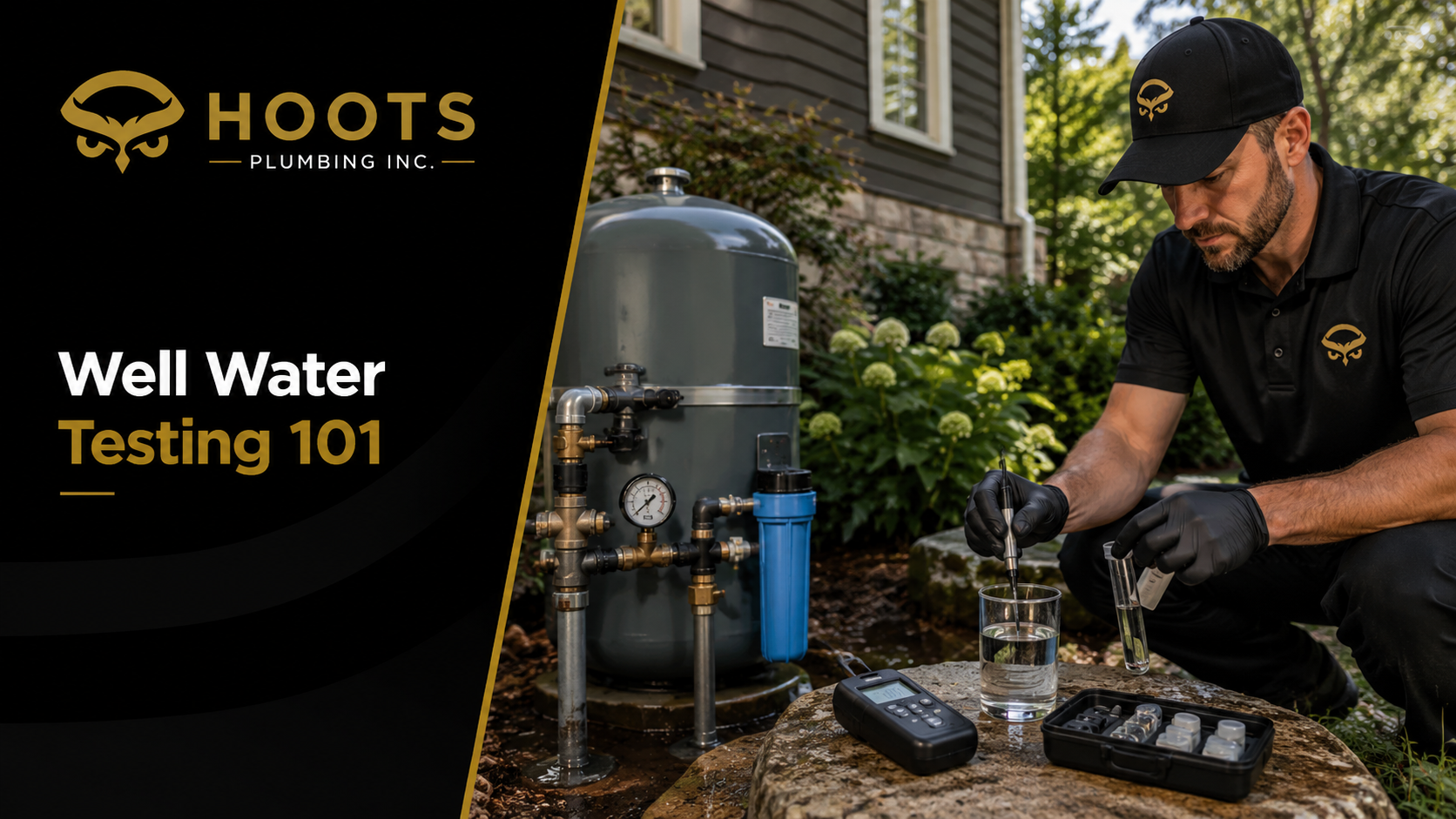
If your home relies on well water, regular water testing is not something you should ignore. Unlike city water, private well water is not automatically monitored by a municipal water system. That means you are responsible for making sure your water is safe for drinking, cooking, bathing, and everyday use.
At Hoots Plumbing Inc., we help homeowners protect their water supply with professional well water testing and treatment solutions. Testing your well water can help detect harmful contaminants early, protect your plumbing system, and give your family peace of mind.
Here is what every well owner should know about well water testing.
Why Well Water Testing Matters
Your well water may look clean, but that does not always mean it is safe. Many contaminants cannot be seen, smelled, or tasted. Regular testing helps identify hidden water quality problems before they affect your health or damage your plumbing system.
Well water testing helps:
✔ Protect your family’s health
✔ Detect bacteria, nitrates, and heavy metals
✔ Identify water quality changes early
✔ Prevent pipe and fixture damage from corrosive water
✔ Confirm your water is safe for drinking and cooking
✔ Help choose the right water treatment solution
If your well water has not been tested recently, now is a good time to schedule a professional water test.
What Well Water Should Be Tested For
A complete well water test checks for common contaminants that may affect safety, taste, odor, and plumbing performance.
Common Well Water Contaminants
| Contaminant | Possible Concerns | Common Sources |
|---|---|---|
| Coliform and E. coli | Digestive illness and unsafe drinking water | Animal waste, septic leaks, surface water intrusion |
| Nitrates and nitrites | Health risks, especially for infants | Fertilizers, sewage, agricultural runoff |
| Lead | Developmental and health concerns | Old plumbing, natural deposits |
| Arsenic | Long-term health risks | Natural geological deposits |
| Hardness minerals | Scale buildup in pipes and fixtures | Natural groundwater minerals |
| pH imbalance | Corrosion or staining | Soil and rock conditions |
| Total dissolved solids | Taste, odor, or mineral concerns | Natural minerals and runoff |
Testing helps you understand exactly what is in your water and what steps may be needed to improve it.
Recommended Well Water Testing Schedule
Well water should be tested regularly, even if there are no obvious problems. A consistent testing schedule helps catch changes before they become serious.
Annual Well Water Tests
At minimum, homeowners should test well water once per year for:
✔ Bacteria
✔ Nitrates
✔ pH levels
✔ Total dissolved solids
Annual testing is one of the best ways to make sure your water remains safe and reliable.
Tests Every 3 to 5 Years
Some contaminants do not need to be tested as often unless there is a known risk in your area. Every 3 to 5 years, consider testing for:
✔ Lead
✔ Arsenic
✔ Heavy metals
✔ VOCs
✔ Pesticides
✔ Chemicals from nearby farms or industrial areas
If your property is near agriculture, construction, fuel storage, or industrial activity, more frequent testing may be recommended.
When Emergency Water Testing Is Needed
You should schedule a water test right away if:
✔ Your property has experienced flooding
✔ Your water changes color, taste, or smell
✔ Family members have unexplained stomach issues
✔ Construction is happening near your well
✔ Your well cap, casing, or pump system has been damaged
✔ You recently repaired or serviced your well system
✔ You notice sediment, cloudiness, or staining
Sudden changes in water quality should never be ignored.
5 Signs Your Well Water Needs Immediate Testing
Sometimes your water gives clear warning signs that something may be wrong. If you notice any of the following, it is time to have your well water tested.
1. Cloudy or Discolored Water
Water that looks cloudy, brown, yellow, or rusty may contain sediment, iron, bacteria, or other contaminants.
2. Metallic or Rotten Egg Smell
A metallic taste may point to minerals or metals in the water. A rotten egg smell is often linked to sulfur or bacteria-related issues.
3. Soap Will Not Lather Properly
If soap does not lather well, your water may be hard. Hard water can cause scale buildup in pipes, fixtures, and appliances.
4. Blue-Green Stains on Fixtures
Blue-green staining may be a sign of acidic or corrosive water. Over time, corrosive water can damage pipes and plumbing fixtures.
5. Unexplained Stomach Issues
If people in your home are experiencing stomach discomfort without a clear cause, contaminated water could be a possible concern. Testing can help identify whether bacteria or other contaminants are present.
How Professional Well Water Testing Works
Professional water testing gives you more accurate results than basic home test kits. It also helps identify the right solution if a problem is found.
Here is how the process usually works:
Sample Collection
A trained technician collects water samples using proper procedures to avoid contamination during the testing process.
Lab Analysis
Samples are sent to a certified laboratory for detailed testing. Lab testing can detect contaminants that may not be visible or obvious.
Clear Results
You receive a detailed report explaining what was found in your water and whether any results are above recommended safety levels.
Treatment Recommendations
If your water has a problem, the next step is choosing the right treatment system. Hoots Plumbing Inc. can help recommend solutions based on your water test results.
Common Water Treatment Solutions
Different water problems require different solutions. That is why testing comes first. Once the issue is identified, the proper treatment system can be selected.
Common treatment options include:
✔ UV purification systems for bacteria
✔ Reverse osmosis systems for nitrates and certain metals
✔ Water softeners for hard water
✔ Whole-house carbon filtration for chemicals, taste, and odor
✔ Sediment filters for dirt, sand, and particles
✔ pH neutralizers for acidic water
The right system depends on your specific water quality results.
DIY Well Protection Tips
While professional testing is important, there are also simple steps homeowners can take to help protect their well water.
To reduce contamination risks:
✔ Keep chemicals, paint, fuel, and pesticides away from the well
✔ Make sure the well cap is sealed and secure
✔ Keep the wellhead elevated above ground level
✔ Divert rainwater runoff away from the well
✔ Do not dispose of motor oil, antifreeze, or chemicals near the well
✔ Keep septic systems properly maintained
✔ Schedule regular well inspections
✔ Keep a record of all water tests and service visits
Good well care helps protect your water supply and your home.
Why Choose Professional Water Testing?
Professional testing gives you reliable information about your water quality. Instead of guessing, you get accurate results and clear recommendations.
Professional well water testing can help:
✔ Identify hidden contaminants
✔ Protect your family’s health
✔ Prevent plumbing damage
✔ Improve water taste and odor
✔ Detect bacteria and chemical concerns
✔ Choose the right water treatment system
✔ Avoid unnecessary equipment or repairs
At Hoots Plumbing Inc., we help homeowners understand their water quality and find practical solutions when problems are discovered.
Need Your Well Water Tested?
Do not gamble with your family’s water supply. If your home uses a private well, regular water testing is one of the most important steps you can take to protect your household.
Hoots Plumbing Inc. provides professional well water testing, certified lab results, and custom treatment recommendations for homeowners in Winston-Salem and surrounding areas.
Call (336) 701-0209 today to schedule your well water test.
Protect your water. Protect your home. Protect your family.