
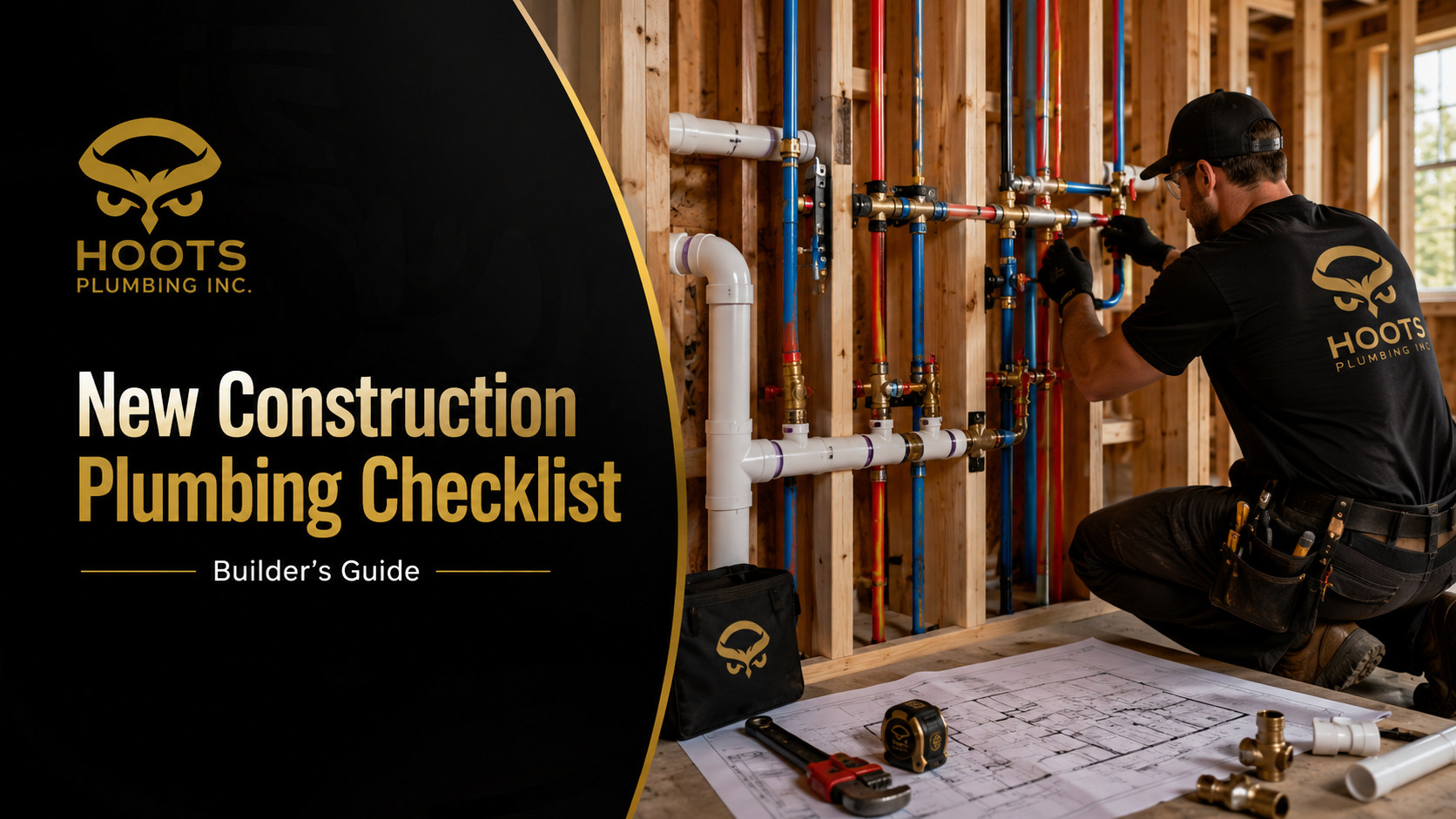
New Construction Plumbing Checklist: A Builder’s Guide
A strong plumbing system is one of the most important parts of any new construction project. If the plumbing is not planned and installed correctly, it can lead to leaks, poor water pressure, drainage issues, water damage, failed inspections, and unhappy homeowners.
At Hoots Plumbing Inc., we understand how important it is to get plumbing right from the beginning. From rough-in to final inspection, every detail matters. A properly installed plumbing system helps protect the property, keeps the project on schedule, and reduces the risk of costly problems after construction is complete.
Here is a complete new construction plumbing checklist every builder should follow.
Why Plumbing Planning Matters in New Construction
Plumbing should never be treated as an afterthought. The best plumbing systems start with proper planning before construction begins.
Good plumbing planning helps:
✔ Prevent costly mistakes during construction
✔ Improve water flow and drainage performance
✔ Reduce the risk of leaks and water damage
✔ Keep the project compliant with local codes
✔ Make future repairs and maintenance easier
✔ Protect the long-term value of the property
When plumbing is installed correctly the first time, builders can avoid delays, callbacks, and expensive rework.
Pre-Construction Plumbing Planning
Before any pipes are installed, builders should work with a licensed plumbing contractor to create a clear plumbing plan. This step helps make sure the system is safe, efficient, and code-compliant.
1. Design With a Licensed Plumber
A licensed plumber can help review the building plans and make sure the plumbing layout works properly for the space.
During the design stage, it is important to:
✔ Verify local plumbing code requirements
✔ Map all water supply lines
✔ Map all drain and waste lines
✔ Plan venting locations
✔ Position fixtures for proper function
✔ Choose efficient pipe routes
✔ Plan access points for future service
✔ Confirm water heater location and capacity
Good design helps prevent issues like poor drainage, weak water pressure, and difficult future repairs.
2. Choose the Right Plumbing Materials
Using the right materials is critical for long-term performance. Cheaper materials may reduce upfront costs, but they can lead to bigger problems later.
Here are common plumbing material recommendations:
| Application | Recommended Materials |
|---|---|
| Water supply lines | PEX or copper |
| Drain lines | PVC for residential projects or cast iron for many commercial projects |
| Gas lines | CSST or black iron |
| Water heater connections | Approved flexible or rigid connections based on local code |
| Fixture shutoff lines | Durable braided stainless steel supply lines |
PEX is flexible and easy to install, while copper is known for durability. PVC is commonly used for residential drain lines, while cast iron may be used in commercial buildings or areas where sound control is important.
Pro Tip: Use Color-Coded Pipes
Color-coded pipes can make future repairs much easier. Blue lines are commonly used for cold water, and red lines are commonly used for hot water. This makes the system easier to identify during inspections, maintenance, or future remodeling.
Construction Phase Plumbing Must-Dos
Once construction begins, plumbing installation must be carefully coordinated with framing, electrical, HVAC, and other trades.
3. Install Water-Saving Fixtures
Water-saving fixtures are a smart choice for modern new construction. They reduce water usage, lower utility costs, and make the property more appealing to homeowners and commercial clients.
Consider installing:
✔ EPA WaterSense® certified toilets
✔ Low-flow showerheads
✔ Water-efficient faucets
✔ Sensor faucets for commercial buildings
✔ High-efficiency water heaters
✔ Smart leak detection devices
These upgrades can improve efficiency without sacrificing comfort or performance.
4. Install a Proper Venting System
Plumbing vents are essential for proper drainage. Without correct venting, drains may gurgle, flow slowly, or allow sewer odors into the building.
A proper venting system should:
✔ Be sized according to code
✔ Support proper drainage flow
✔ Prevent sewer gas from entering the property
✔ Include air admittance valves where allowed and needed
✔ Work with the full drain, waste, and vent system
Drain lines should also be installed with proper slope. In many cases, drain lines require a 1/4-inch slope per foot, but requirements can vary depending on pipe size and local code.
5. Include Easy-Access Points
Access points make future service much easier. Without them, simple repairs can require opening walls, floors, or ceilings.
Builders should include:
✔ Shutoff valves at every fixture
✔ Main water shutoff access
✔ Cleanouts on drain lines
✔ Access panels for concealed plumbing
✔ Water heater access space
✔ Crawl space or basement access where applicable
Easy-access plumbing is not just convenient. It can save homeowners money and reduce damage during future repairs.
Pre-Inspection Plumbing Checklist
Before walls are closed and drywall is installed, the plumbing system should be fully tested and reviewed. This is one of the most important stages of the project.
Test Before Closing Walls
Before covering plumbing lines, make sure to:
✔ Pressure test all water supply lines
✔ Check for leaks at fittings and joints
✔ Verify hot water reaches fixtures properly
✔ Confirm proper drain line slope
✔ Check venting installation
✔ Inspect fixture rough-in locations
✔ Test gas line pressure if applicable
✔ Confirm shutoff valves are installed correctly
✔ Check pipe insulation where needed
Skipping these tests can lead to hidden leaks or failed inspections after walls are already finished.
Required Plumbing Documentation
Proper documentation helps builders, inspectors, and future homeowners understand the system.
Important documents may include:
✔ Pipe material certifications
✔ Manufacturer warranties
✔ Water heater warranty information
✔ Fixture specifications
✔ Gas line test results
✔ Pressure test results
✔ As-built plumbing diagrams
✔ Inspection records
Keeping these documents organized can help with warranty claims, future repairs, and resale value.
Common New Construction Plumbing Mistakes to Avoid
Even small plumbing mistakes can cause major problems after construction is complete. Builders should watch for these common issues.
Using Low-Quality Materials
Choosing inferior pipe materials to cut costs can lead to leaks, corrosion, and early system failure. Quality materials protect the project and reduce future callbacks.
Improper Drain Line Slope
Drain lines that are too flat may cause slow drainage and backups. Drain lines that are too steep can also create problems by allowing water to move too quickly while solids are left behind.
Missing Pipe Insulation
Pipes installed in exterior walls, crawl spaces, attics, or other cold areas should be properly insulated. Missing insulation can increase the risk of frozen pipes and water damage.
Forgetting Expansion Tanks
In many plumbing systems, expansion tanks are needed to protect water heaters and plumbing components from pressure changes. Skipping this step can shorten equipment life and create pressure problems.
Skipping Pressure Tests
Pressure testing should always happen before drywall is installed. This helps catch leaks while the plumbing system is still visible and easy to repair.
Poor Fixture Placement
Fixture placement affects comfort, water flow, and future service access. Fixtures should be positioned carefully during the planning stage to avoid layout problems later.
Why Hire a Professional Plumbing Contractor?
New construction plumbing requires experience, code knowledge, planning, and proper installation. A professional plumbing contractor helps make sure the system is installed safely and correctly.
Working with a professional plumber gives builders:
✔ Code-compliant installation
✔ Proper system design
✔ Reliable rough-in work
✔ Accurate pressure testing
✔ Fewer inspection issues
✔ Better long-term performance
✔ Reduced risk of leaks and callbacks
✔ Warranty protection for materials and equipment
Professional installation helps protect both the builder and the property owner.
Partner With Hoots Plumbing Inc. for Your Next Project
Hoots Plumbing Inc. provides professional plumbing services for new construction projects, including rough-in plumbing, fixture installation, water lines, drain lines, gas lines, inspections, and final system testing.
We work with builders to help keep projects moving on schedule while making sure the plumbing system is built for long-term performance.
Our new construction plumbing services include:
✔ Plumbing system planning
✔ Rough-in plumbing
✔ Water supply line installation
✔ Drain and vent line installation
✔ Gas line installation
✔ Fixture installation
✔ Water heater installation
✔ Pressure testing
✔ Final plumbing inspection support
Whether you are building a new home, remodeling a property, or managing a commercial construction project, Hoots Plumbing Inc. is ready to help.
Schedule New Construction Plumbing Services Today
Do not leave your plumbing system to chance. A properly designed and installed plumbing system can help prevent costly repairs, water damage, and inspection delays.
Hoots Plumbing Inc. proudly serves builders in Winston-Salem and surrounding areas with reliable new construction plumbing services.
Call (336) 701-0209 or book online today to partner with Hoots Plumbing Inc. for your next project.