
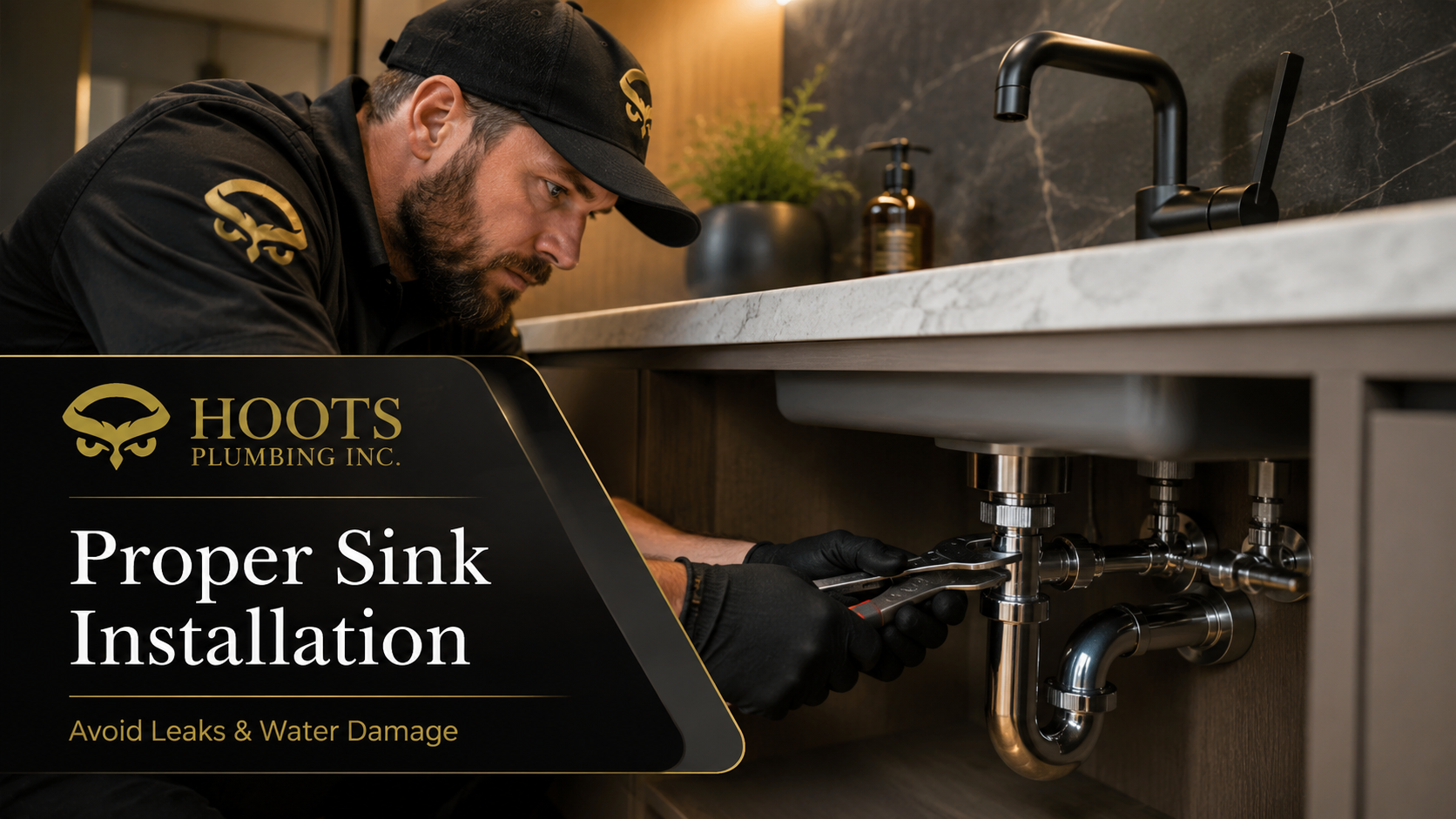
A sink may seem like a simple fixture, but proper installation is extremely important. If a sink is not installed correctly, it can lead to leaks, slow drainage, cabinet damage, mold growth, and expensive plumbing repairs.
Whether you are replacing an old sink, remodeling your kitchen, upgrading your bathroom, or installing a brand-new fixture, every connection needs to be sealed, aligned, and tested properly.
At Hoots Plumbing Inc., we have seen how small installation mistakes can turn into major water damage. That is why proper sink installation should never be rushed.
Here is what homeowners should know about installing a sink the right way.
Why Proper Sink Installation Matters
A properly installed sink does more than look good. It helps protect your home from water damage and keeps your plumbing system working correctly.
Correct sink installation can help:
✔ Prevent leaks under the sink
✔ Protect cabinets and countertops from water damage
✔ Improve drainage performance
✔ Reduce the risk of mold and mildew
✔ Prevent loose fixtures and pipe movement
✔ Avoid costly future plumbing repairs
✔ Extend the life of your sink, faucet, and drain system
Even a small leak under a sink can cause serious damage if it goes unnoticed. Over time, water can soak into cabinets, flooring, drywall, and surrounding materials.
Start With the Right Tools
Before beginning any sink installation, it is important to have the proper tools ready. Using the wrong tools can damage fittings, loosen connections, or make the installation more difficult than it needs to be.
A basic sink installation toolkit may include:
✔ Adjustable wrench
✔ Pliers
✔ Screwdrivers
✔ Plumber’s putty
✔ 100% silicone sealant
✔ Bucket or towels
✔ Pipe wrench if needed
✔ Flashlight for checking under-sink connections
Having the correct tools on hand helps make the process smoother and reduces the chance of damaging pipes, fittings, or the sink itself.
Inspect the Area Before Installation
If you are replacing an old sink, inspect the area carefully before installing the new one. This is the perfect time to check for hidden problems.
Look for:
✔ Water stains inside the cabinet
✔ Soft or swollen wood
✔ Mold or mildew
✔ Rusted fittings
✔ Loose drain connections
✔ Old faucet leaks
✔ Cracked supply lines
✔ Signs of previous water damage
If there are existing leaks or damaged parts, they should be fixed before the new sink is installed. Installing a new sink over old plumbing problems can lead to leaks later.
Apply a Proper Seal
A watertight seal is one of the most important parts of sink installation. Without the right seal, water can leak around the sink, drain, or faucet base.
Plumber’s putty is commonly used around sink drains to help prevent leaks. In some situations, especially with porous materials or certain countertop surfaces, 100% silicone sealant may be a better option.
A proper seal helps protect:
✔ Cabinets
✔ Countertops
✔ Flooring
✔ Walls
✔ Drain connections
✔ Faucet areas
The seal should be applied evenly and carefully. Too little sealant can allow leaks, while too much can create a messy finish and may interfere with proper fitting.
Secure the Sink Properly
Once the sink is positioned, it needs to be secured correctly. A loose sink can shift over time, which may weaken seals and connections.
The sink should sit level and stable. Mounting clips, brackets, or fasteners should be tightened enough to hold the sink firmly in place.
However, it is important not to overtighten. Over-tightening can crack the sink, damage the countertop, or break fittings.
The goal is a snug, secure fit without putting too much pressure on the materials.
Tighten Connections Carefully
Under the sink, there are several important plumbing connections. These may include drain pipes, water supply lines, faucet connections, and shutoff valves.
Each connection should be tightened securely, but not too tightly.
Over-tightening can cause:
✔ Cracked fittings
✔ Damaged washers
✔ Stripped threads
✔ Leaks
✔ Broken connections
Loose connections can also leak. That is why it is important to tighten everything carefully and check each connection after installation.
Test the Drainage
After the sink is installed, drainage should be tested before the job is considered complete.
Fill the sink with water, then release it and watch how it drains. While the water is draining, check under the sink for leaks.
Look for:
✔ Slow draining
✔ Water dripping from pipe connections
✔ Water pooling around the drain
✔ Leaks near the faucet base
✔ Loose fittings
✔ Gurgling sounds
✔ Unusual odors
Slow drainage may indicate poor pipe alignment, a partial clog, or an issue with the drain assembly. Catching these problems early can help prevent future damage.
Check for Leaks After Installation
Once everything is connected, run both hot and cold water. Let the water run for a few minutes while checking every connection under the sink.
Pay close attention to:
✔ Faucet connections
✔ Supply lines
✔ Shutoff valves
✔ Drain assembly
✔ P-trap
✔ Sink edges
✔ Disposal connections if installed
Even a small drip should be fixed right away. Small leaks often become larger over time and can cause hidden damage inside cabinets.
Common Sink Installation Mistakes to Avoid
Many sink problems happen because of simple installation mistakes. Avoiding these errors can help protect your home.
Common mistakes include:
✔ Not sealing the drain properly
✔ Using the wrong sealant
✔ Over-tightening fittings
✔ Leaving connections too loose
✔ Installing pipes at the wrong angle
✔ Forgetting to test for leaks
✔ Ignoring old damaged supply lines
✔ Failing to secure the sink properly
✔ Not checking drainage performance
A sink installation may look simple, but small details matter.
When to Call a Professional Plumber
Some homeowners are comfortable with simple DIY projects. However, sink installation is not always as easy as it appears. Older plumbing, custom countertops, garbage disposals, double sinks, vessel sinks, and specialty fixtures can make the job more complicated.
You should consider calling a professional plumber if:
✔ You are unsure how to connect the drain properly
✔ Your plumbing is old or corroded
✔ You notice leaks under the sink
✔ You are installing a garbage disposal
✔ You have a custom countertop
✔ You are replacing shutoff valves
✔ The sink is not draining correctly
✔ You want the job done safely and correctly
Professional installation can help prevent leaks, protect your home, and give you peace of mind.
Professional Sink Installation From Hoots Plumbing Inc.
At Hoots Plumbing Inc., we provide professional sink installation and plumbing services for kitchens, bathrooms, laundry rooms, utility spaces, and more.
Whether you are remodeling, upgrading, or replacing a damaged fixture, our team can help make sure your sink is installed correctly the first time.
Our sink installation services can include:
✔ Kitchen sink installation
✔ Bathroom sink installation
✔ Faucet installation
✔ Drain connection
✔ Garbage disposal connection
✔ Leak repair
✔ Supply line replacement
✔ Shutoff valve inspection
✔ Drainage testing
We focus on proper sealing, secure connections, clean installation, and reliable performance.
Protect Your Home From Leaks and Water Damage
A properly installed sink can help prevent leaks, drainage problems, and costly water damage. If you are planning a sink replacement or installation, do not take chances with your plumbing.
Hoots Plumbing Inc. is here to help with dependable sink installation and plumbing services.
Call Hoots Plumbing Inc. today or visit our website to schedule your service.
Get your sink installed the right way and protect your home from future plumbing problems.